
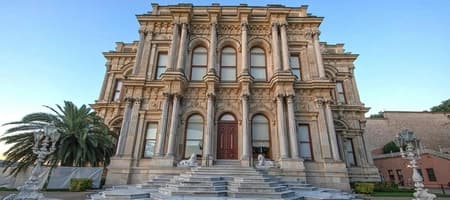
Kucuksu Pavilion Entrance
Price without Pass
Istanbul E-pass includes Kucuksu Pavilion Entrance Ticket. Simply scan your QR code at the entrance and get in.
Discover the Historical Charm of Kucuksu Pavilion
Nestled between the Goksu and Kucuksu rivers, the meadow was once an imperial garden for Ottoman sultans. Over time, Goksu and its surroundings became a favored retreat for istanbul's residents.
A Timeless Gem Described by Evliya Celebi
Evliyâ Celebi, the renowned 17th-century Turkish traveler, praised Goksu, calling it "the water of eternity." He depicted it as a serene locale where people enjoyed rowboat rides, surrounded by rose gardens, quaint pavilions, and state-owned water mills. During Sultan Murad IV's reign (1623-1640), the area, extending to Kandilli with its lush cypress trees, was re-landscaped and dubbed "Silver Cypress."
The Birth of an Imperial Pavilion
The first significant structure in this imperial garden was erected during Sultan Mahmud i's reign (1730-1754). Grand Vizier Divitdâr Mehmed Emin Pasha constructed a wooden hunting kiosk (1751-1752) for the Sultan, who frequented the area for hunting and shooting practice.
Under Sultan Selim III (1789-1807), this seaside lodge saw major renovations, including a fountain dedicated to his mother, Mihrisah Valide Sultan, in 1806. This lodge also served Sultan Mahmud II (1808-1839) until Sultan Abdulmecid (1839-1861) ordered its demolition to build the new Kucuksu Pavilion in 1856-1857. The pavilion later received additional ornate decorations under Sultan Abdulaziz (1861-1876).
Kucuksu Pavilion: A Museum-Palace
Opened as a museum-palace in 1983, Kucuksu Pavilion spans a ground area of 15 x 27 meters. The stone structure, supported by loadbearing walls, features two main stories and a basement. The basement houses the cellar, kitchen, and servants' quarters, while the upper floors include four corner rooms opening into a central gallery, reflecting traditional Turkish house design. Primarily used for recreation and hunting, the pavilion exudes historical charm.
Architectural and Artistic Marvels
The seaward facade of Kucuksu Pavilion is adorned with relief decorations, an ornamental pool, a fountain, and a staircase, all showcasing Western motifs. Inside, the pavilion resembles an art museum with plaster reliefs and painted designs on the ceilings, italian marble fireplaces, intricate parquet floors, European-style furniture, carpets, and paintings, making it a treasure trove of historical and artistic significance.
Frequently Asked Questions about Kucuksu Pavilion Entrance
Kucuksu Pavilion welcomes visitors daily from 9 AM to 5:30 PM. Note that hours may vary on holidays or special occasions, so it's best to check ahead
Photography for personal use is permitted inside Kucuksu Pavilion. However, to protect the artifacts, flash photography and the use of tripods might be restricted.
Kucuksu Pavilion is a hidden treasure, attracting tourists and history lovers with its remarkable architecture, picturesque setting along the Bosphorus, and deep historical significance.
The pavilion is famed for its beautiful stone construction, ornate facade with relief decorations, and Western-influenced design elements.
Kucuksu Pavilion is a key symbol of Ottoman heritage, built in the mid-19th century during Sultan Abdulmecid’s reign. it exemplifies the grandeur and cultural richness of the Ottoman Empire.
Kucuksu Pavilion, also known as Kucuksu Kasri or Goksu Pavilion, is a historic retreat located on the Asian shore of the Bosphorus in istanbul, Turkey. it once served as a leisure spot for Ottoman sultans.
Important Notes
- Kucuksu Pavilion is closed on Mondays.
- Present your QR code from the E-pass customer panel and get in.
- Kucuksu Pavilion visit takes 1 hour on average.
- Photo ID will be required from child Istanbul E-pass holders.